
What decision does your organization need to make right now?
Opening a service, understanding why your facilities underperform, taking the load off your nurse managers or getting routines down on paper. We start with a concrete situation, work with the people who decide and the people who do the work, and leave your organization ready to carry on alone.
Led by a nurse who moved from bedside care to hospital management, overseeing the operating room, sterile processing (CME), imaging and the emergency department.

What we see
Operational problems rarely sit inside one department. They sit between them.
Scheduling blames staff, staff blame the equipment, finance cannot see the cost of care. That is why the work starts by listening to the people who do the work, brings departments together around a leadership decision and ends with a routine the organization can sustain on its own.
Four practice areas
Pick the situation closest to yours.

We want to offer a new service. What do we need to get started?
We take stock of what already exists, show what is missing and organize staff, partners and costs so you open on a date you can keep.
Explore this area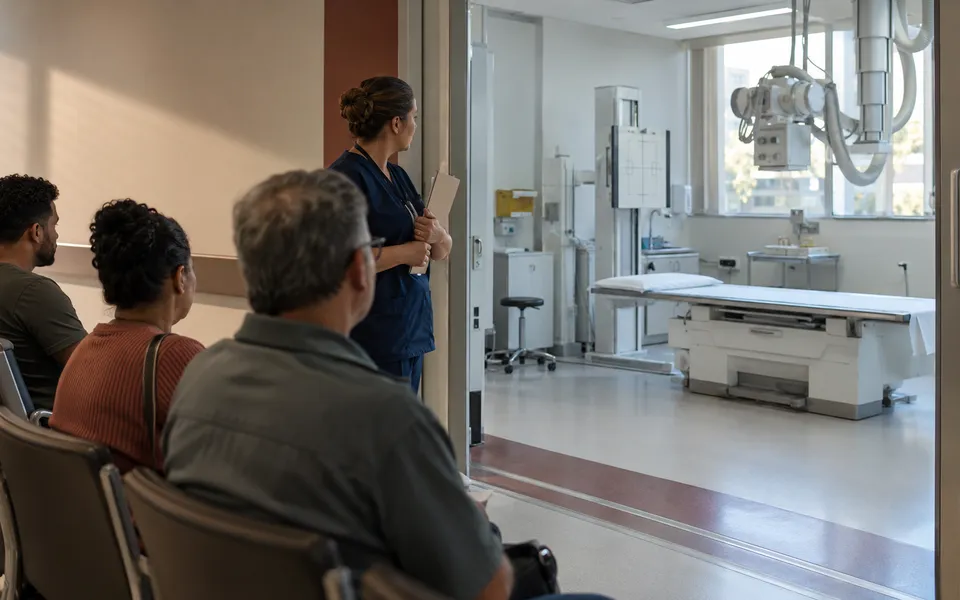
We have the facilities. Why don't they deliver what we expect?
We measure where capacity is lost between booking and care, before any investment in rooms, equipment or staff.
Explore this area
Everything goes through the nurse manager. How do we share responsibility?
We sort out who decides what, how work is assigned and how nurse leaders follow up with the team, applied on the real unit.
Explore this area
The team knows how to do it. Why is it so hard to write it down?
We turn your team's practice into protocols they recognize as their own, ready for daily work and the next survey.
Explore this areaHow we solve it
From the first conversation to a routine that sticks.
The same path applies to all four areas. The proposal sets the scope, participants, review milestones and completion criteria.
- 1
Understand
We listen to leadership and staff, observe the work and analyze existing records.
DeliverableAssessment and priorities - 2
Define
We choose the problem, the scope, the deliverables and who owns each decision.
DeliverableAgreed work plan - 3
Apply
We prepare tools and people, test within the scope and deal with whatever gets in the way.
DeliverableScope tested with the team - 4
Follow up
We check the agreed criteria and hand materials and ownership over to management.
DeliverableRoutine handed over to the organization

Who leads the work
Experience from the inside.
The consulting work is led by a nurse who moved from bedside care to hospital management, overseeing the operating room, sterile processing (CME), imaging and the emergency department.
- Oversaw the operating room, sterile processing, imaging and the emergency department at the same time.
- Built the hospital's performance metrics with leadership and analyzed room utilization.
- Built an occupational health service and closed contracts with employers.
- Prepared the hospital for health inspections and accreditation, writing routines with the teams.
Quick assessment
Where should your organization start?
Answer four questions. You instantly see which area makes the most sense for your situation and which step to start with.
Questions before we start
Can we start with a single unit?
Yes, and it is usually the best path. A defined scope lets you test, measure and only then expand.
Do we need to hire every area?
No. The project can stay in one area or combine deliverables when the problem calls for it. The scope makes that choice clear.
Do we need to change systems?
It depends on the assessment. First we look at processes, responsibilities and how existing resources are used.
What is out of scope?
Timeline, investment, site visits and team involvement are set in the proposal. Integrations and software development get their own assessment and scope.
Related insights
Worth reading before our first conversation
 Hospital operations · 8 min
Launching a new healthcare service: check the opening conditions before promising a date
How to launch a specialty or occupational health line by building on what already exists: inventory, gaps, patient journey, costs, turnaround, and opening.
 Management and metrics · 8 min
Imaging service capacity: measure the schedule before buying another room
How to separate available, scheduled, and delivered capacity in X-ray, ultrasound, and CT, find the bottleneck, and test a scheduling change before investing.
 Nursing team management · 6 min
Nurse staffing schedules: linking coverage, workload, and absences
How to plan nurse staffing schedules around patient care demand, competencies, and absences, using Cofen standards, metrics, and clear reassignment criteria.
 Quality and team development · 7 min
Healthcare protocols and training: from the current version to competency
Organize protocols, control versions, and assess healthcare team competencies, with shift-based training, metrics, and a verifiable update workflow.